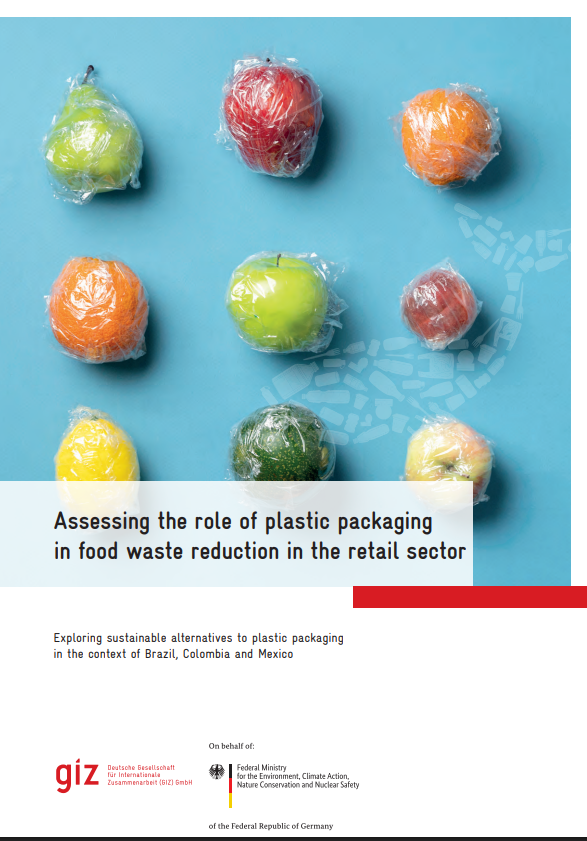
This resource provides a rigorous, evidence-based assessment of plastic packaging’s role in the modern economy and waste system examining both its functional value and its environmental costs. Plastic packaging is simultaneously one of the most effective materials for food safety, logistics, and shelf life extension, and one of the most visible and damaging contributors to global waste pollution. Any credible circular economy strategy for plastic packaging must grapple with both realities.
The assessment covers the functional roles plastic packaging performs that drive its continued use barrier properties, weight reduction versus alternatives, food waste prevention benefits, and cold chain logistics alongside the waste management challenges it creates, including the diversity of polymer types and formats, contamination of recycling streams, and the economics of recycled content versus virgin material.
It examines how Extended Producer Responsibility (EPR) systems can be designed to incentivize packaging formats that retain functional value while dramatically reducing environmental impact, including through eco-design, recyclability mandates, recycled content requirements, and format restrictions. For brand owners, packaging engineers, EPR scheme designers, and policymakers, this assessment provides a balanced evidence base for making plastic packaging decisions that are both commercially viable and environmentally defensible.
- Plastic packaging is functional and difficult to replace wholesale any credible circular economy strategy must account for its legitimate roles in food safety, logistics, and shelf life.
- The assessment evaluates the full lifecycle of plastic packaging: from functional performance through waste generation, collection economics, and end-of-life treatment.
- EPR provides the most effective mechanism for internalizing the environmental costs of plastic packaging without eliminating its functional benefits.
- Eco-design, recyclability mandates, and recycled content requirements are the three levers that EPR can deploy to shift packaging toward sustainability while preserving commercial function.
- Essential for brand owners evaluating packaging material choices, EPR scheme designers setting recyclability standards, and policymakers considering plastic packaging regulation.
Frequently Asked Questions: Plastic Packaging, Circular Economy, and EPR
Q1. Can plastic packaging be eliminated and replaced with alternatives?
Not wholesale and not quickly plastic packaging performs specific functional roles in food safety, moisture barriers, and cold chain logistics that alternatives currently cannot match at equivalent cost and scale. The more productive question is which plastic packaging formats are genuinely necessary, which can be reduced or replaced, and which can be redesigned for recyclability, which is exactly the analysis EPR eco-modulation is designed to drive.
Q2. Why is plastic packaging so difficult to recycle at scale?
The challenge is not technical but economic and logistical. Plastic packaging comes in dozens of polymer types that cannot be mixed in recycling, varying formats with different sortability, contamination from food residue, and a geographic mismatch between where packaging is consumed and where recycling infrastructure exists. EPR addresses this by funding the collection and sorting infrastructure that makes recycling economically viable.
Q3. What does ‘recyclable packaging’ actually mean under EPR?
Under most EPR frameworks, ‘recyclable’ means a packaging format can be collected, sorted, and processed into a secondary material at sufficient scale to be commercially viable – not just technically capable of being recycled. This practical definition matters because some formats are theoretically recyclable but not economically so at current infrastructure levels. EPR fee eco-modulation typically applies this commercial recyclability standard.
Also Read – Plastic Waste Transport From The Nile River