

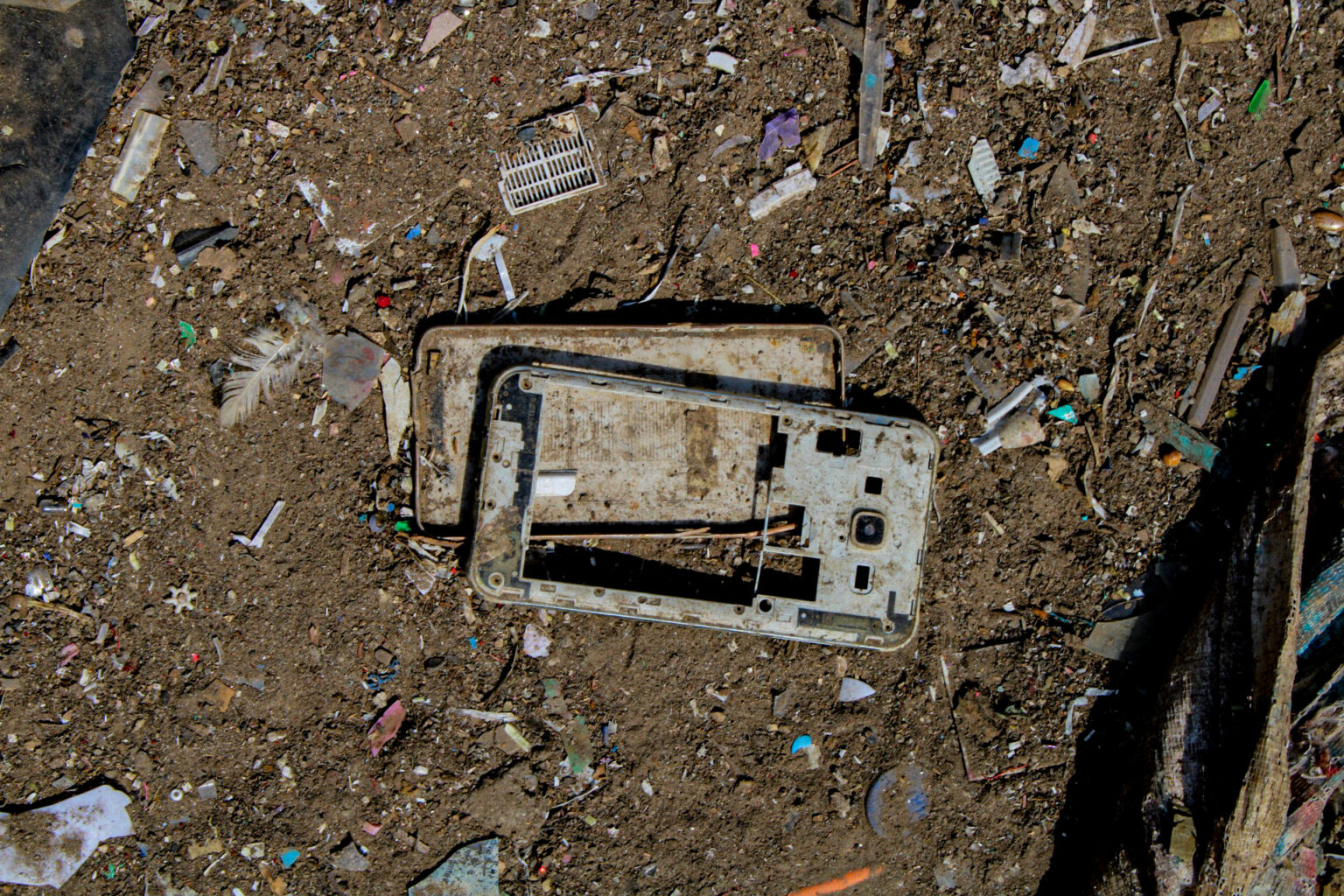
Angelica Zapata on e-waste material recovery, why good technical work means adapting not copying, and the repairability mindset Germany taught her.
This is the sixth in a series we are calling 10 Years. 10 Lessons where BFS team members share what they actually learned from their hardest projects.
- Angelica Zapata is a Technical Consultant at BFS, working across e-waste and plastic waste streams in Egypt and Latin America.
- She joined BFS two years ago after a career pivot triggered by COVID and a beach clean-up in Colombia, where she found her own employer’s packaging washed up on the shore.
- Her most challenging task at BFS has been finding the right balance between technical and financial feasibility.
- What motivates her most is seeing proposals actually executed. A report that never leaves the desk is the thing that most deflates her.
- The stream she watches most closely: material recovery from electronic waste. Too many sub-streams still have no established best practice.
- Her takeaway from living in Germany: the repairability mindset. Before buying the new phone, ask whether the old one actually stopped working.
|
$66Bn+ Projected annual value of critical materials recovered from waste streams globally by 2046, e-waste is a primary source (IDTechEx, 2025) |
9.2%
CAGR of the global critical material recovery market 2026–2046, the fastest-growing segment within waste management (IDTechEx) |
62M
Tonnes of e-waste were generated globally in 2022, with only 22.3% formally recycled, and the rate projected to fall further without infrastructure investment |
| <1%
Share of Africa’s e-waste that is formally recycled under environmentally sound conditions, the gap Angelica’s work in Egypt directly addresses |
16.4%
CAGR of the Middle East & Africa e-waste recycling market 2025–2030, the fastest-growing regional market globally (Mordor Intelligence) |
2 BFS projects Angelica works on at the moment: MENA 130 (e-waste collection in Egypt) and LTA 031 (EPR fee calculation for e-waste in the Dominican Republic) |
Source citations:
‘$66Bn critical material recovery by 2046’ and ‘9.2% CAGR’ — IDTechEx Critical Material Recovery 2026-2046 report.
’62 million tonnes / 22.3% recycled’ — Global E-Waste Monitor. ‘<1% Africa formal recycling’ — ACET/WEEE Forum.
‘16.4% CAGR MEA’ — Mordor Intelligence E-Waste Recycling Market 2026.
Angelica, you are a chemical engineer who worked for a major consumer goods company in Colombia. What made you leave?
COVID was part of it. That moment made a lot of people ask real questions. For me, the question was: what is my work actually contributing to?
I liked the company. I loved my colleagues. But when I was honest with myself, I was on the wrong side of the movie.
The moment that made it concrete was a beach clean-up I volunteered for in Buenaventura, Colombia. We were picking up waste and I kept finding packaging from the brand I worked for. Toothbrushes. All over the beach.
That was when this idea hit my mind. I decided I wanted to work on the other side.
Germany was always interesting to me. In Colombia, Germany means engineering done seriously. I looked for a master’s programme, got a scholarship, and started thinking about what came next. My thesis director knew BFS because Omar and Aurora were already there. I applied to ten jobs. BFS was my first priority. It was the one I got.
You now work across two regions and two waste streams. What does the work actually look like?
The main project right now is MENA 130. We are designing a collection scheme for electronic waste (e-waste) in Egypt. The goal is to give Egypt a viable system for collecting and managing e-waste at scale. That means understanding the local context, the infrastructure, the actors, the economics, and building something people will actually use long-term when EPR comes into force.
I was also partially involved in GLB 014, identifying investment opportunities for the International Finance Corporation (IFC) across the plastic waste value chain in Latin America.
The common thread is knowledge transfer. Think of this fact: you cannot take a system that works in Germany and drop it into a Caribbean island, such as the Dominican Republic, where I am working right now, and expect it to function. The infrastructure is different. The institutions are different. The private sector dynamics are different. What we actually do is understand what has and hasn’t worked elsewhere, understand why it worked, gather the learnings, and then figure out, via a continuous communication process with the local stakeholders, how to adapt it to what exists locally. That is the real skill.
What has been the hardest thing you have done at BFS?
The financial analysis. Full stop.
It was my first one. Even with previous project examples from colleagues to work from, I was genuinely stressed. So many considerations and assumptions have to be made and justified. I did not know what I did not know, which is the worst position to work from, and also, it confronted me with a hard reality… to make things properly in the waste sector is expensive. Sometimes you can have great technical ideas, but it is too expensive for your local context.
I got through it. Now I understand it in a way I could not have learned any other way. You have to do the thing to really understand the thing.
What motivates you most in this work?
Seeing things get executed.
Most of what we produce is roadmaps. Reports. Benchmarks. Recommendations. A lot of the time you genuinely do not know if the client will act on what you built for them for so many months.
When I can see that a client actually intends to implement what we designed, that is a completely different feeling. The work lands differently. It has weight.
When I suspect a proposal is going to sit in a drawer, it is hard to stay motivated. I think that is honest, and I think most consultants feel this even if they do not say it.
Which waste stream do you watch most closely right now?
Material recovery from e-waste is such a huge and beautiful challenge.
Plastic has been in the conversation for decades. We know how to recycle it. The technology exists. The gap is largely in execution, finance, and policy, not knowledge.
E-waste is different. There are so many sub-streams within it, and we still do not have established best practices for recovering all the materials involved. Rare metals, solar panels, composite materials, circuit boards, batteries. Every sub-category has its own complexity. The technology is still being developed. The market is still forming.
And the timing matters. Demand for critical raw materials is rising. The EU and other markets are introducing regulations that will force more accountability in e-waste flows. The gap between what is being generated and what is being properly recovered is enormous. That is where I want to work.
One last question. What do you want readers to take away?
The repairability mindset.
Living in Germany taught me something I had not really absorbed before. The people around me here, many of whom have considerably more purchasing power than the circles I moved in back in Colombia, regularly choose to repair things rather than replace them. There are repair cafes. People spend an afternoon fixing a coffee machine rather than ordering a new one.
In Colombia, and in most countries I know well, the reflex is different. You buy new because new signals success. If you can afford it, you do not repair, you replace, at least with the items that reflect status. On the other hand, the repair services are really cheap, and people do not develop this skill by themselves.
Now, before I buy anything, I ask: has this actually stopped working? Or am I just responding to pressure?
Because the cost of not asking that question, multiplied across billions of people, is not abstract. Earth Overshoot Day, the date each year when humanity has consumed more natural resources than the planet can regenerate, arrives earlier every single year.
We know how to design better systems. We are working on recovering materials. The harder work is changing what happens before the waste even exists.
“Before you buy the new model, ask yourself if your phone actually stopped working. That one question changes everything.”
Angelica Zapata, Technical Consultant, BlackForest Solutions
About the series:
BlackForest Solutions turned 10 in March 2026. Instead of a celebration, we asked 10 team members to share the hardest lesson from their hardest project. This is what a decade of doing the work actually looks like.
About Angelica Zapata:
Angelica Zapata is a Technical Consultant at BlackForest Solutions GmbH, specialising in e-waste and plastic waste management for emerging markets. Her work spans feasibility studies, roadmap design, financial modelling, and business model development for clients in Egypt and Latin America. She holds a background in chemical engineering and completed her master’s specialisation in Germany after leaving the consumer goods industry. She has been with BFS for two years.
Project at a Glance
| MENA 130 | Project Snapshot |
| Geography | Egypt |
| Focus | E-waste collection scheme design |
| Scope | Collection system design, financial modelling, business model development |
E-waste: Electronic waste; discarded electrical or electronic devices, spanning a wide range of sub-streams with distinct material compositions and treatment requirements.
Material recovery: The process of extracting valuable raw materials from waste streams, including rare and critical metals from electronic devices.
Earth Overshoot Day: The date each year when humanity has used more natural resources than the planet can regenerate in a full year. The date arrives progressively earlier each decade.
IFC: International Finance Corporation, the private sector arm of the World Bank Group, financing investment in developing countries.
FAQs: E-Waste Material Recovery, Knowledge Transfer in Emerging Markets, and the Repairability Mindset
Q1. Why do different e-waste sub-streams still lack established best practices for material recovery?
E-waste is not a single material — it spans rare earth elements, circuit boards, lithium-ion batteries, display screens, and dozens of other component categories, each with distinct chemical compositions and treatment requirements. Unlike plastic or paper recycling, which has benefited from decades of process development, many e-waste sub-streams are still in the early stages of technology development, meaning the methods for recovering critical materials cost-effectively and safely at scale simply do not yet exist in standardized form.
Q2. What critical raw materials can be recovered from electronic waste?
Electronic devices contain a range of commercially valuable and strategically critical materials including gold, silver, copper, palladium, rare earth elements, lithium, cobalt, gallium, and indium — most of which are used in circuit boards, batteries, display components, and motors. Recovering these materials from e-waste is increasingly commercially viable as demand for critical raw materials grows and primary mining supply chains face geopolitical disruption.
Q3. Why can’t a waste management system that works in Germany simply be replicated in Egypt or Latin America?
The infrastructure, institutions, private sector dynamics, informal sector structures, and regulatory environments in Egypt or Latin America are fundamentally different from Germany’s. A system that depends on dense reverse vending machine networks, high consumer compliance, and a robust PRO infrastructure will not function in a context where none of those conditions exist. The real skill in circular economy implementation is understanding why a system works and adapting those principles to what actually exists locally — not copying the output.
Q4. What does e-waste collection scheme design actually involve for a country like Egypt?
Designing a viable e-waste collection scheme for Egypt requires understanding the current informal collection infrastructure, the economics of material recovery at local prices, the regulatory framework and enforcement capacity, the range of producers and importers operating in the market, and the logistics of moving collected material to treatment facilities. The MENA 130 project combines collection system design, financial modelling, and business model development to create a scheme that can attract private sector participation and function without permanent subsidy.
Q5. What is the repairability mindset and why does it matter for waste reduction?
The repairability mindset means asking, before purchasing a replacement product, whether the existing one has genuinely stopped functioning — or whether the impulse to replace it is driven by social pressure, marketing, or planned obsolescence. At the individual level it seems small. Multiplied across billions of people and billions of consumer electronics purchases annually, the decision to repair rather than replace represents an enormous reduction in resource extraction, manufacturing emissions, and waste generation.
Q6. What is Earth Overshoot Day and what does it reveal about current consumption patterns?
Earth Overshoot Day is the date each year when humanity has consumed more natural resources than the planet can regenerate in a full year. In 2024, it fell on August 1st — meaning humanity used the equivalent of 1.7 planets worth of resources. The date has moved progressively earlier every decade, reflecting consumption growth that outpaces both efficiency improvements and population change. It is one of the most stark indicators that current consumption and waste patterns are structurally unsustainable.
Q7. How does BFS approach the challenge of adapting circular economy knowledge for emerging markets?
BFS starts by building a deep understanding of what has worked in more developed circular economy markets and more importantly why it worked. That diagnostic is then combined with on-the-ground analysis of what institutions, infrastructure, private sector dynamics, and regulatory conditions actually exist in the target market. The output is a design that achieves the same functional goals through locally viable means — not an imported model that assumes conditions that do not exist.